Unlocking the Secrets of Spanish Superlatives
Discover the secrets of using superlatives in spanish to enhance your language skills and foster community recognition and belonging.


The Easiest Solution
All you need:
Power Outlet
Wifi or Ethernet

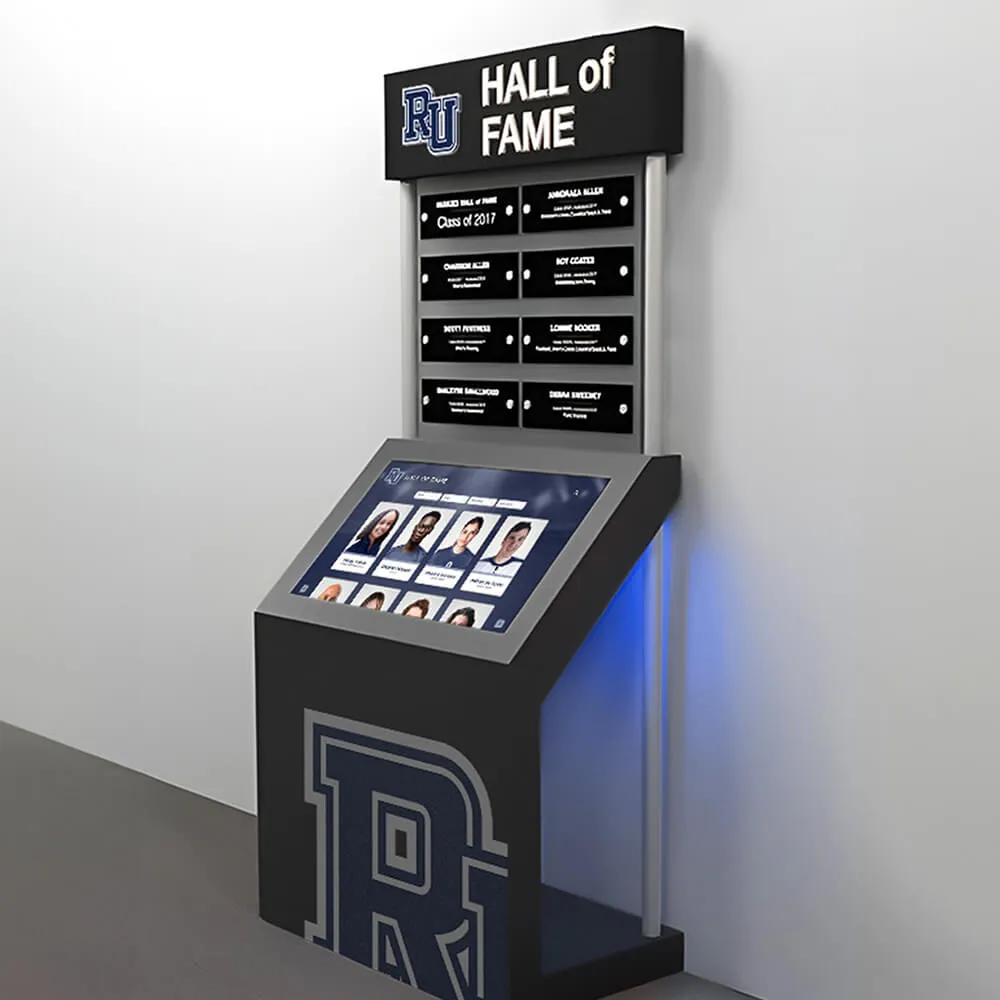
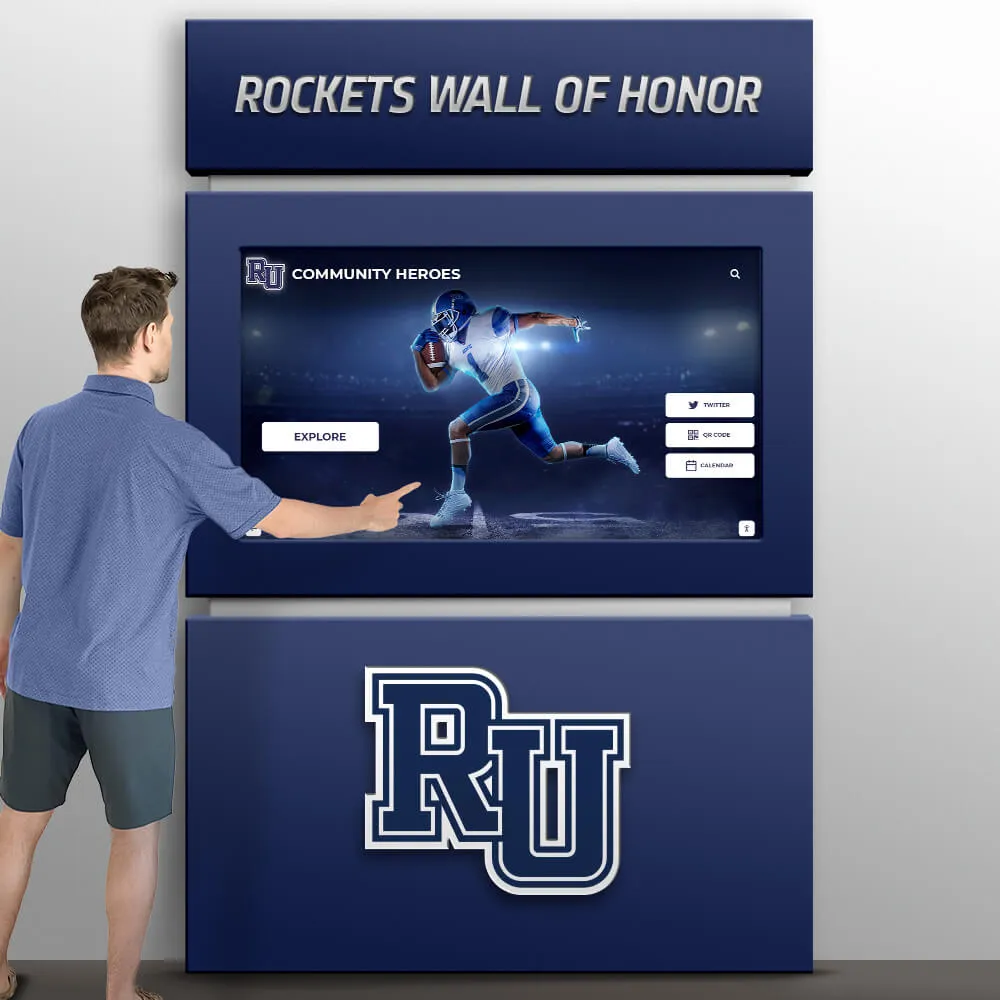

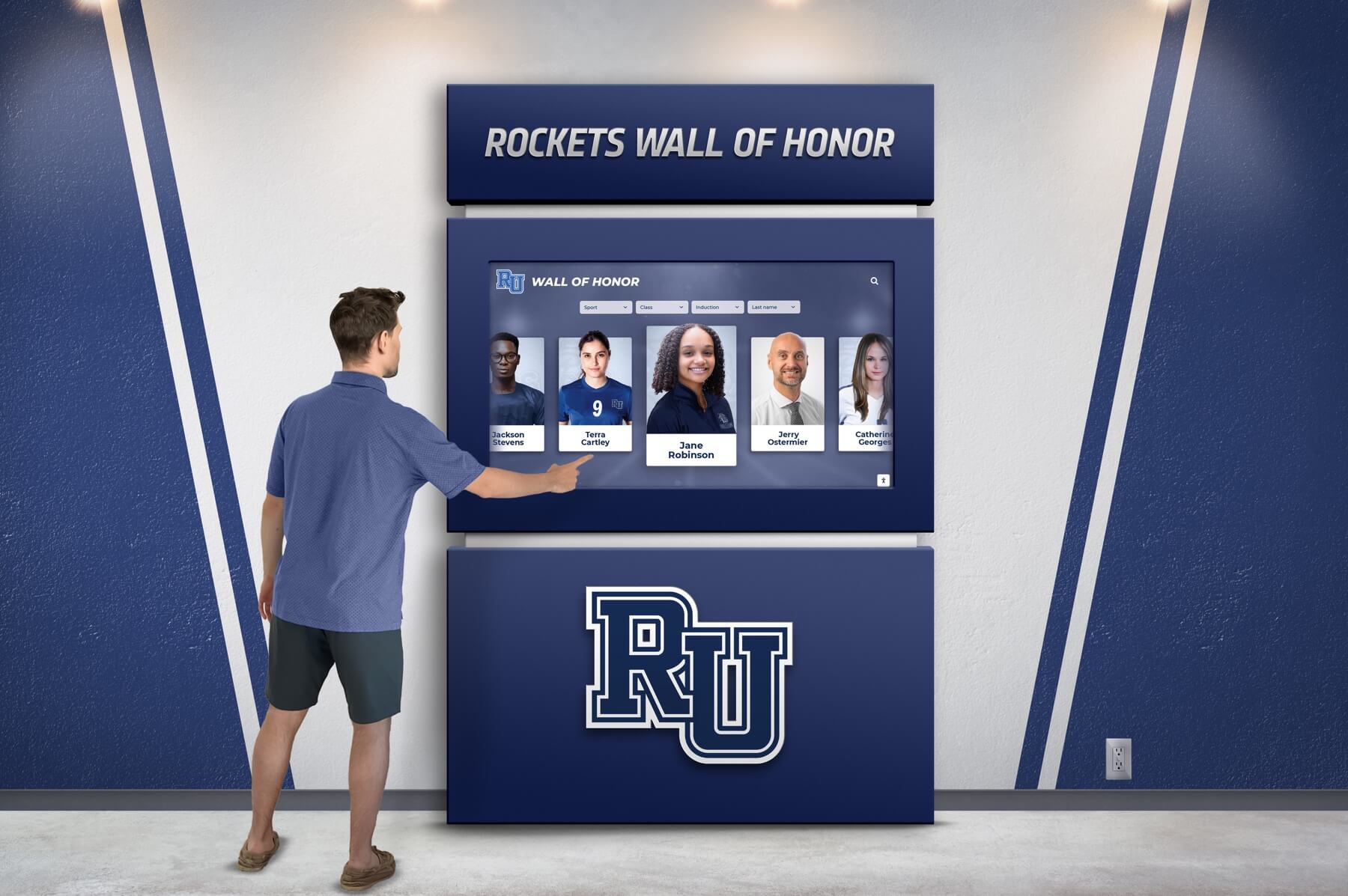
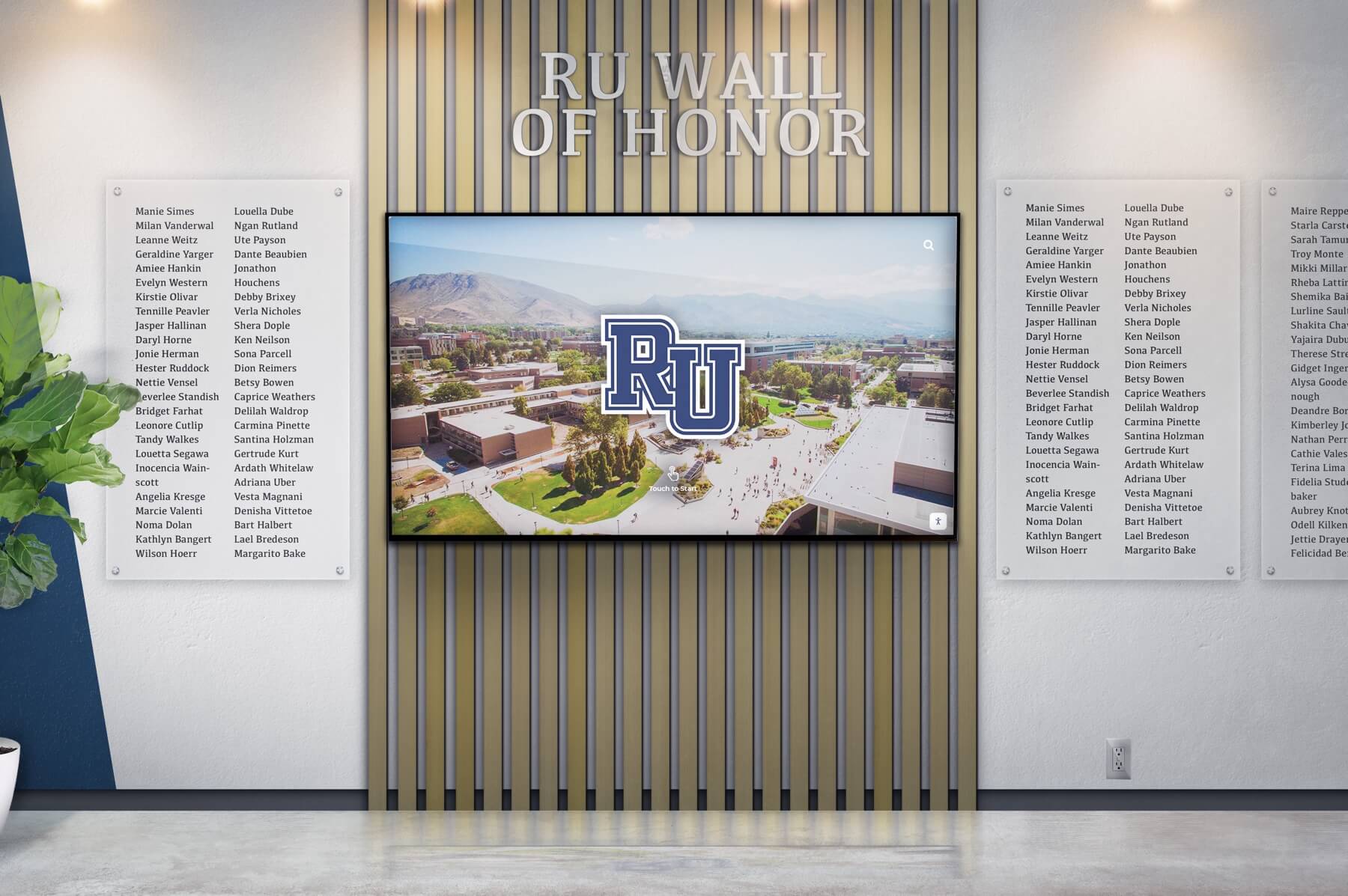
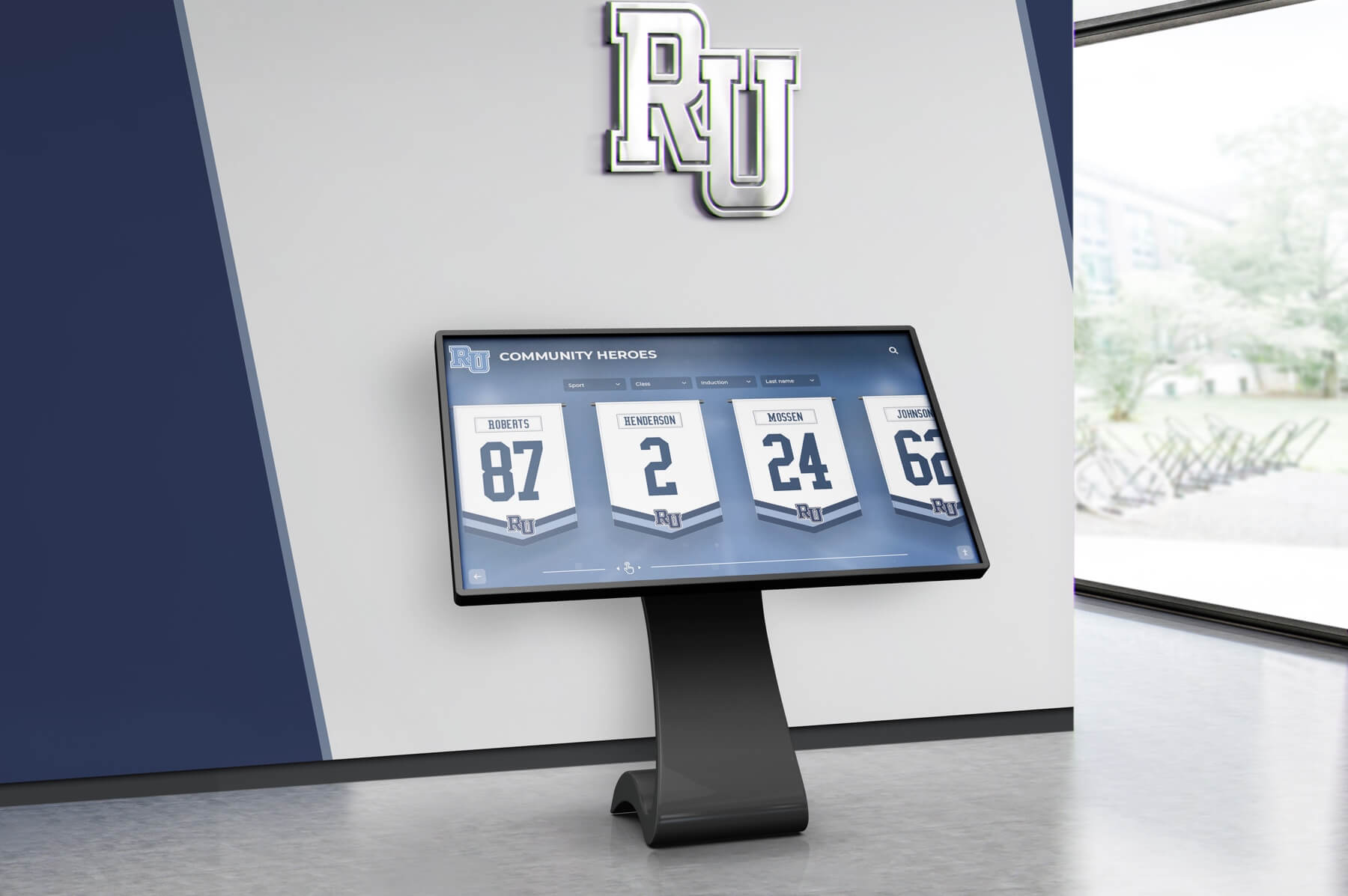
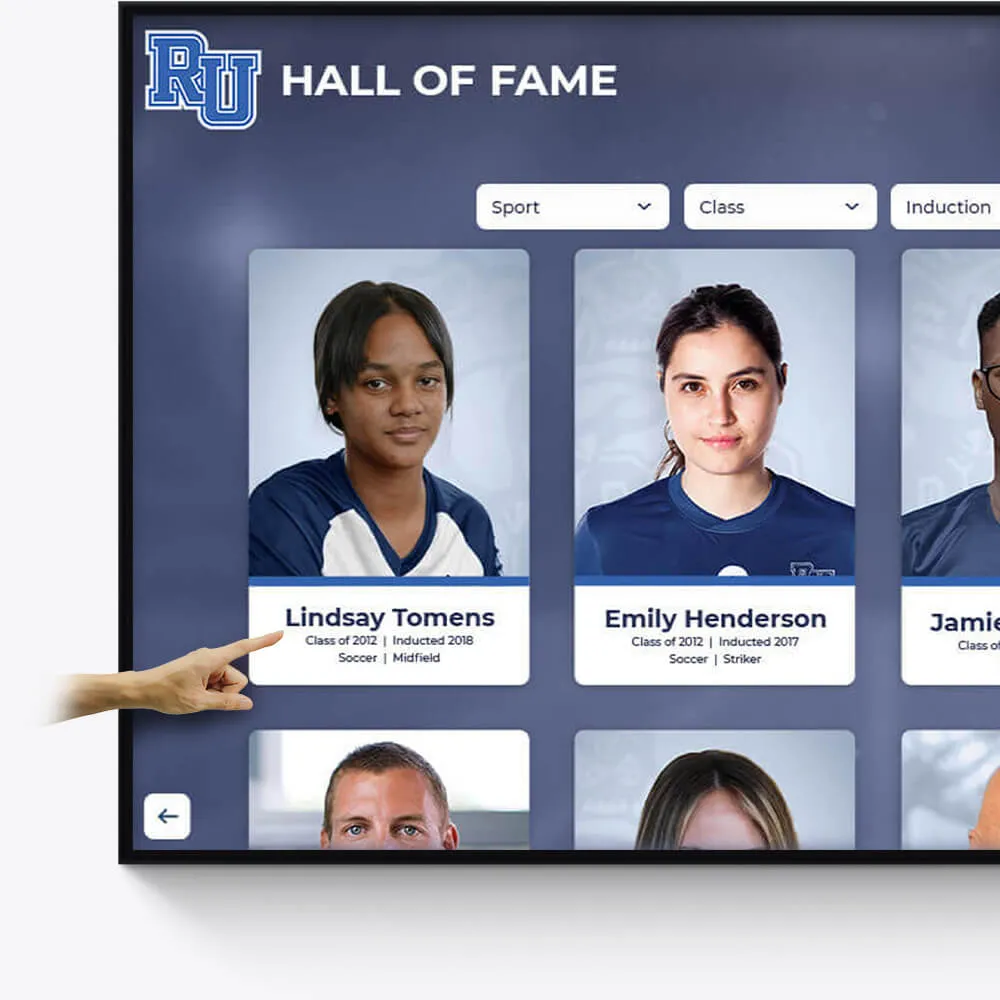
Hall of Fame
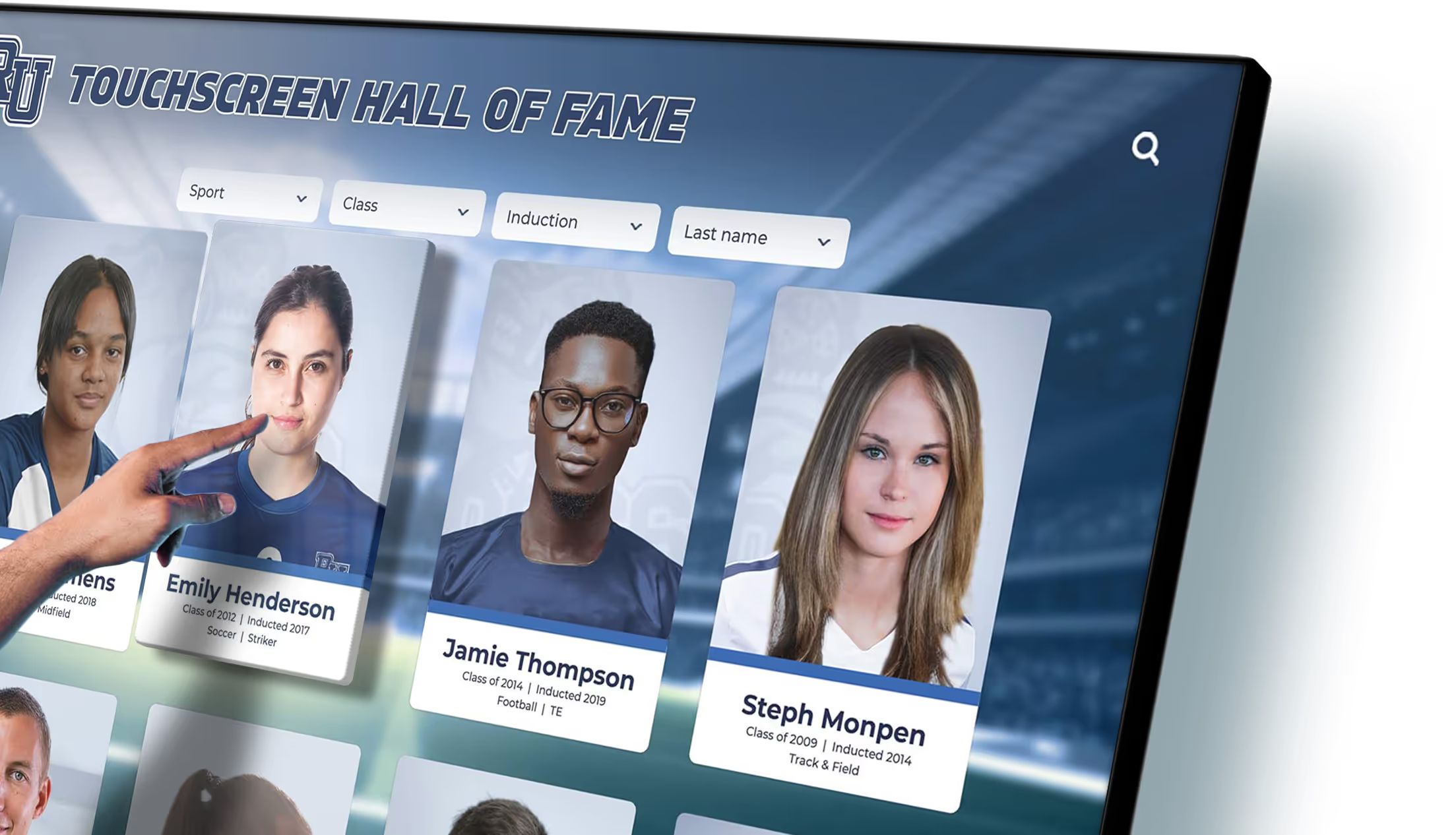
Celebrate the achievements of exceptional athletes and teams with our interactive Hall of Fame displays. Tailored to reflect your institution's rich history and spirit.
Customizable design to match school colors and branding
Easily updatable to add new inductees and achievements
Interactive elements to engage visitors and tell compelling stories
Academic Awards
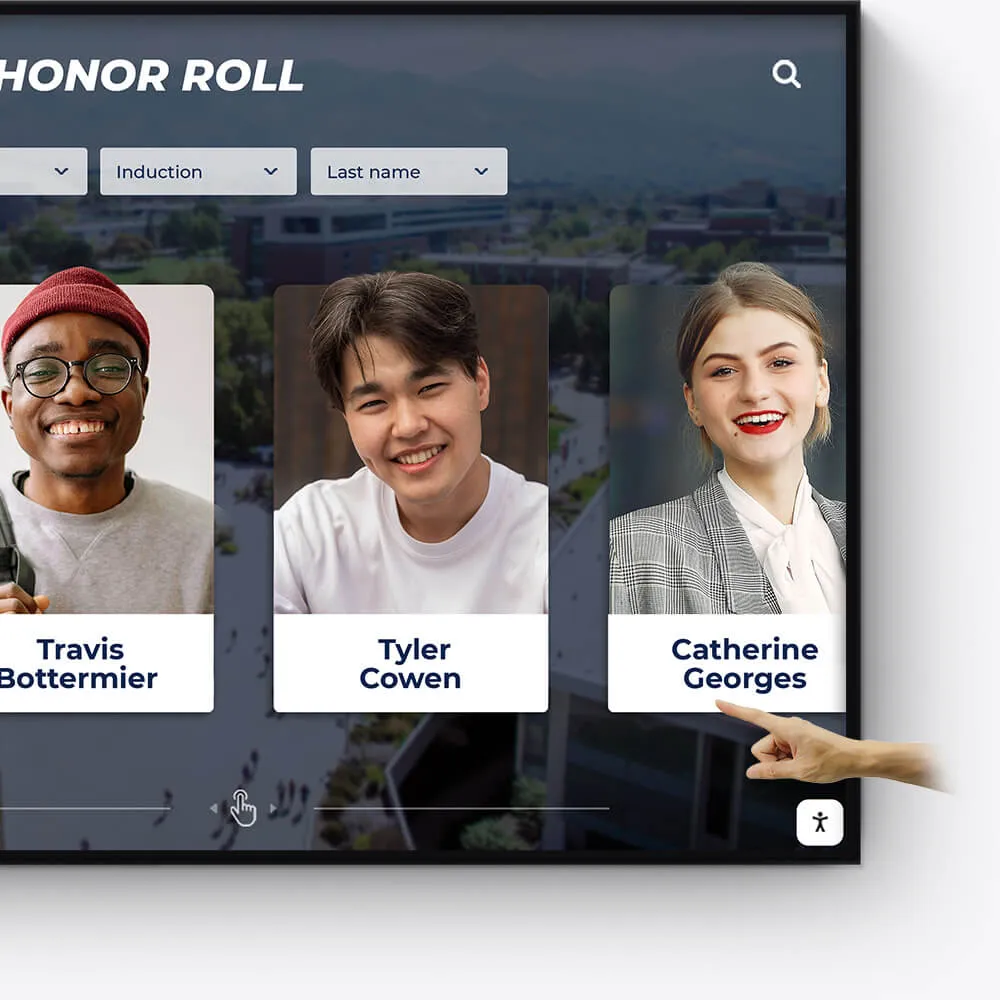
Honor academic excellence with a dynamic and interactive display of student achievements, scholarships, and notable accomplishments.
Showcase academic high achievers and scholarship recipients
Feature departmental and individual academic milestones
Integrate with school databases for real-time updates
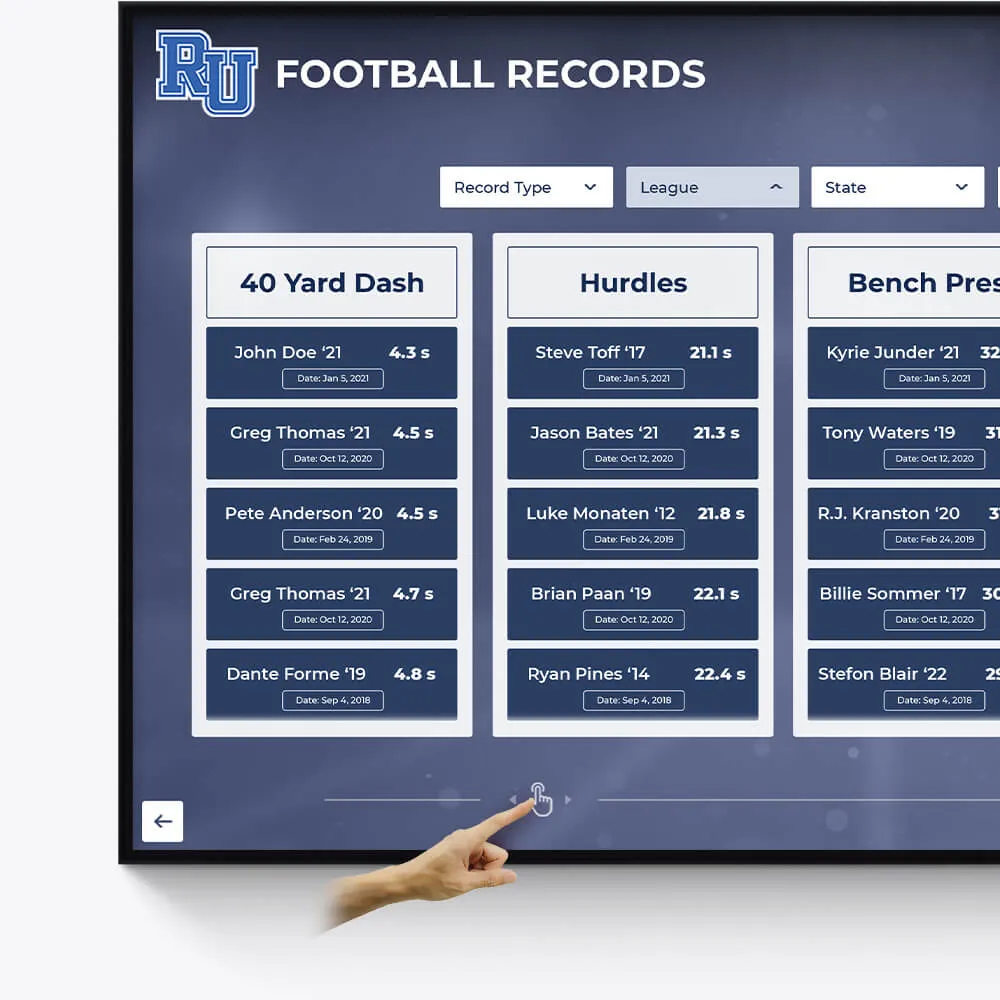
Record Boards
Immortalize outstanding athletic records and performances with our versatile digital record boards, ensuring lasting recognition.
Display current and historical record holders
Easy-to-update interface for new records
Engaging visuals to celebrate athletic achievements
Donor Recognition
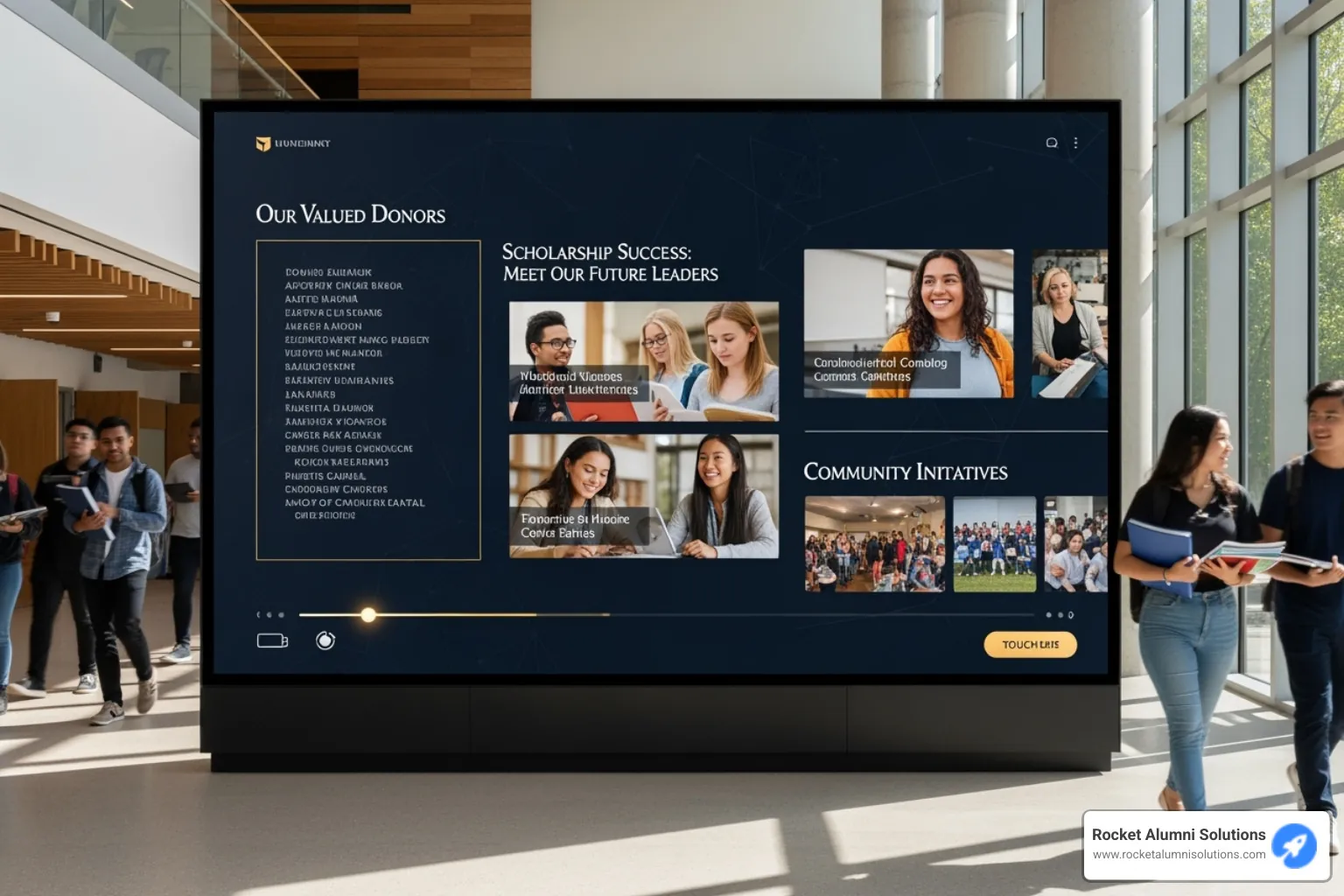
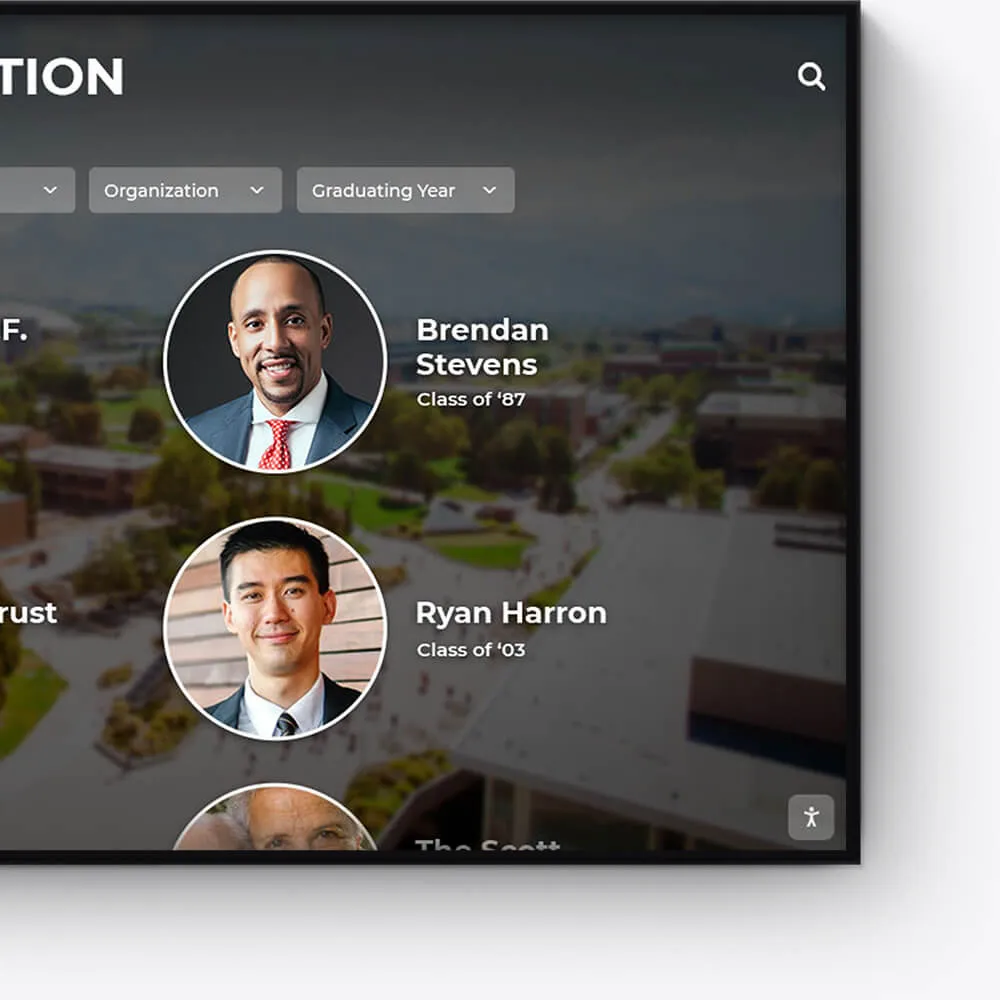
Acknowledge the generosity and impact of your donors with a dedicated and customizable digital display, fostering a culture of gratitude.
Highlight individual donors and their contributions
Incorporate donor stories and impact testimonials
Feature interactive donor walls with search functionality
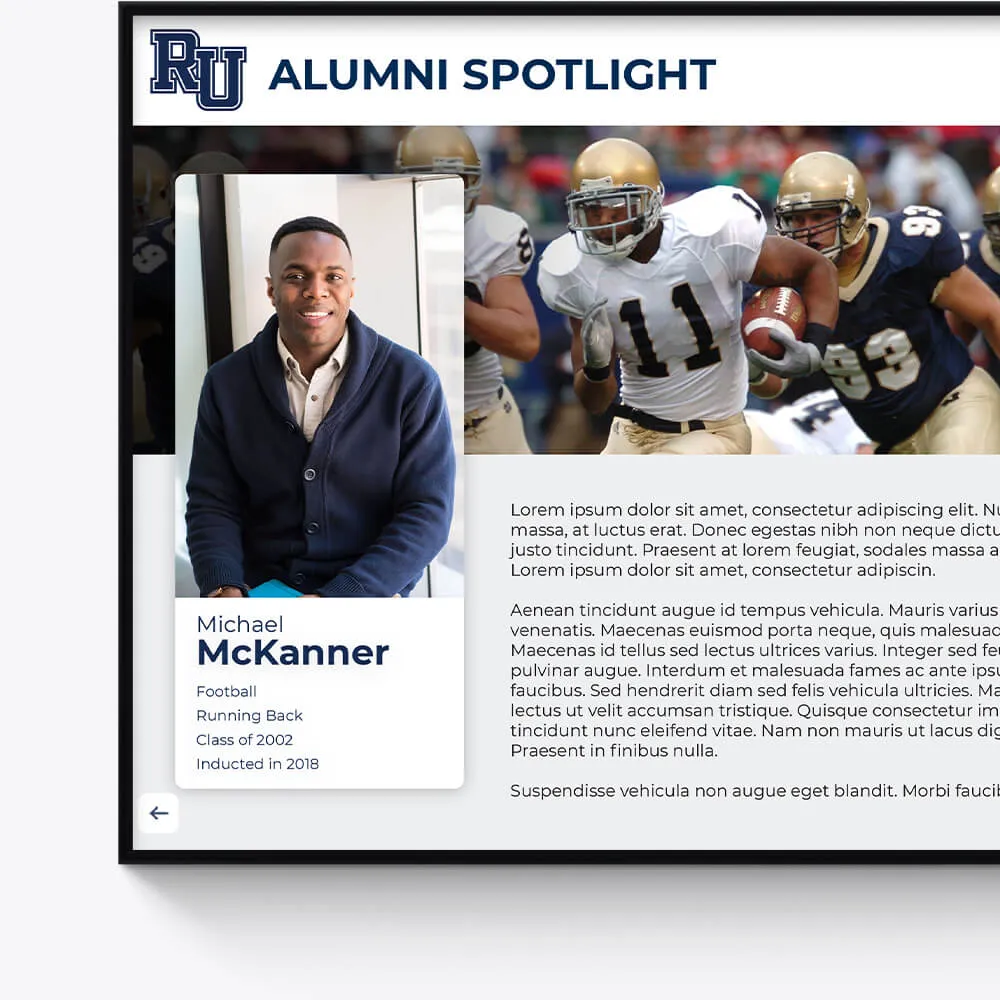
Distinguished Alumni
Showcase the success stories of your alumni, inspiring current and future students with a visually appealing and interactive alumni gallery.
Profile notable alumni with biographies and achievements
Link to alumni networks and success stories
Celebrate diverse paths and accomplishments post-graduation
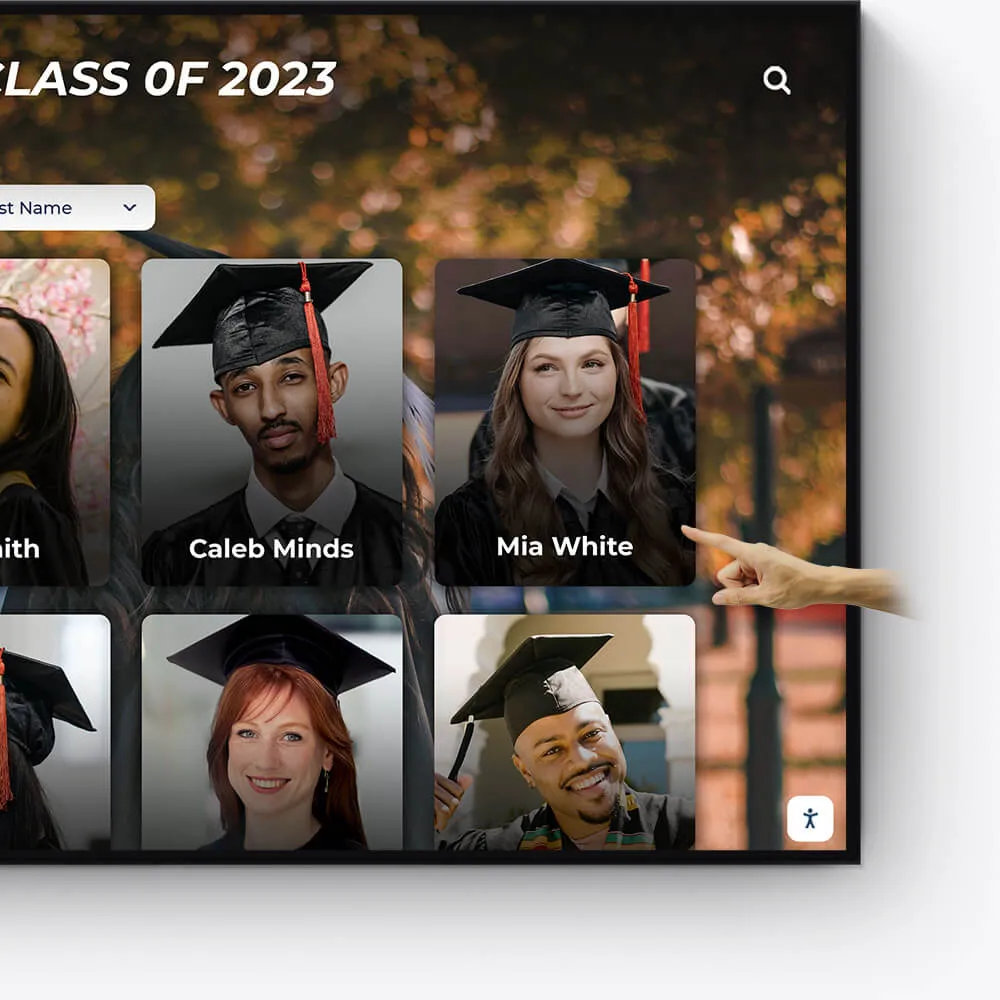
Graduation Honors
Celebrate your graduates' milestones with a dedicated display for cum laude, magna cum laude, and summa cum laude honorees.
Feature valedictorians, salutatorians, and honor graduates
Showcase graduation speeches and memorable moments
Offer a digital yearbook experience with graduate profiles

Team History
Chronicle the journey and milestones of your sports teams, creating an engaging historical narrative with our interactive displays.
Highlight championship wins and significant games
Showcase evolution of team uniforms and logos
Include past and present team rosters and coaches

Wall of Honor for Veterans & Service Members
Honor the bravery, service, and sacrifice of veterans and active service members with a dedicated Wall of Honor. This tribute celebrates their commitment and the impact they have made in service to our nation.
Recognize the sacrifices and achievements of veterans and military personnel
Share personal stories, service histories, and accolades
Create a respectful and engaging tribute to those who serve
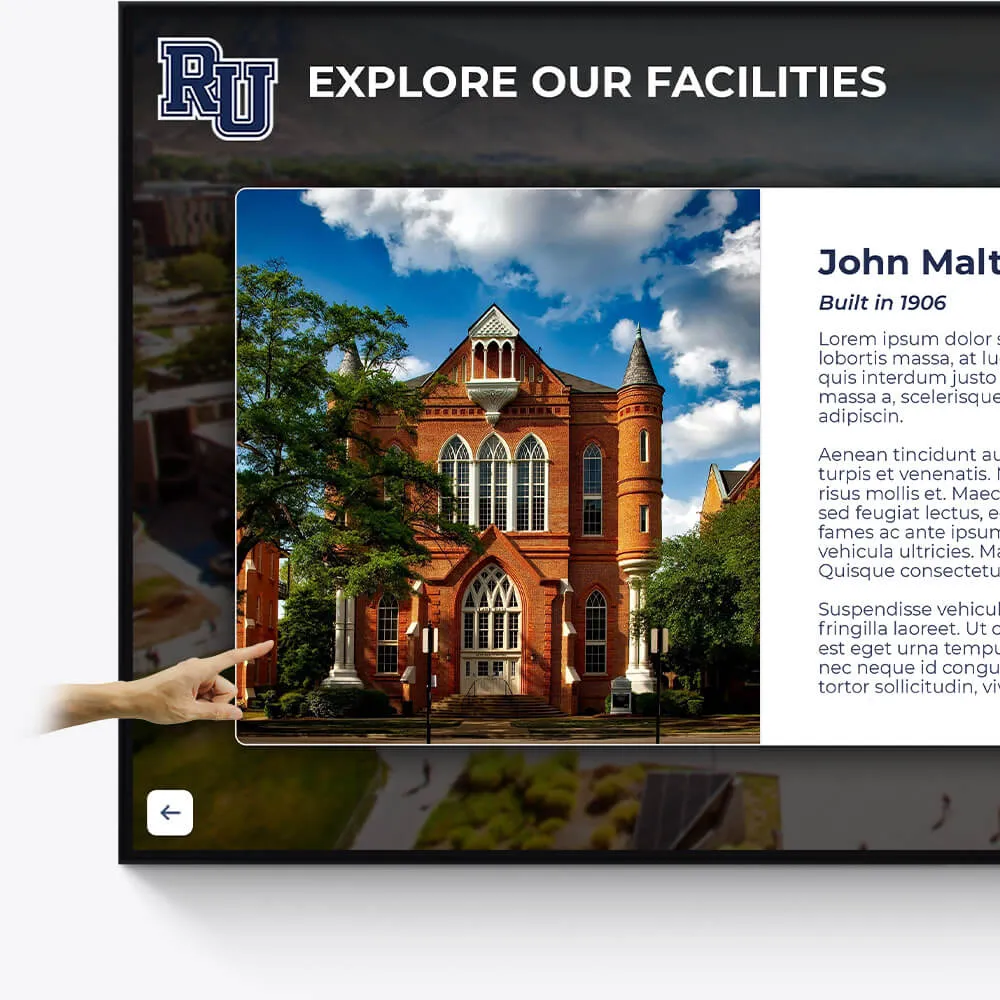
Facilities
Enhance the visitor experience at your facilities with interactive displays showcasing the history, features, and milestones of your buildings and grounds.
Provide virtual tours of your campus and facilities
Highlight renovations, expansions, and historical significance
Include donor recognition for facility contributions
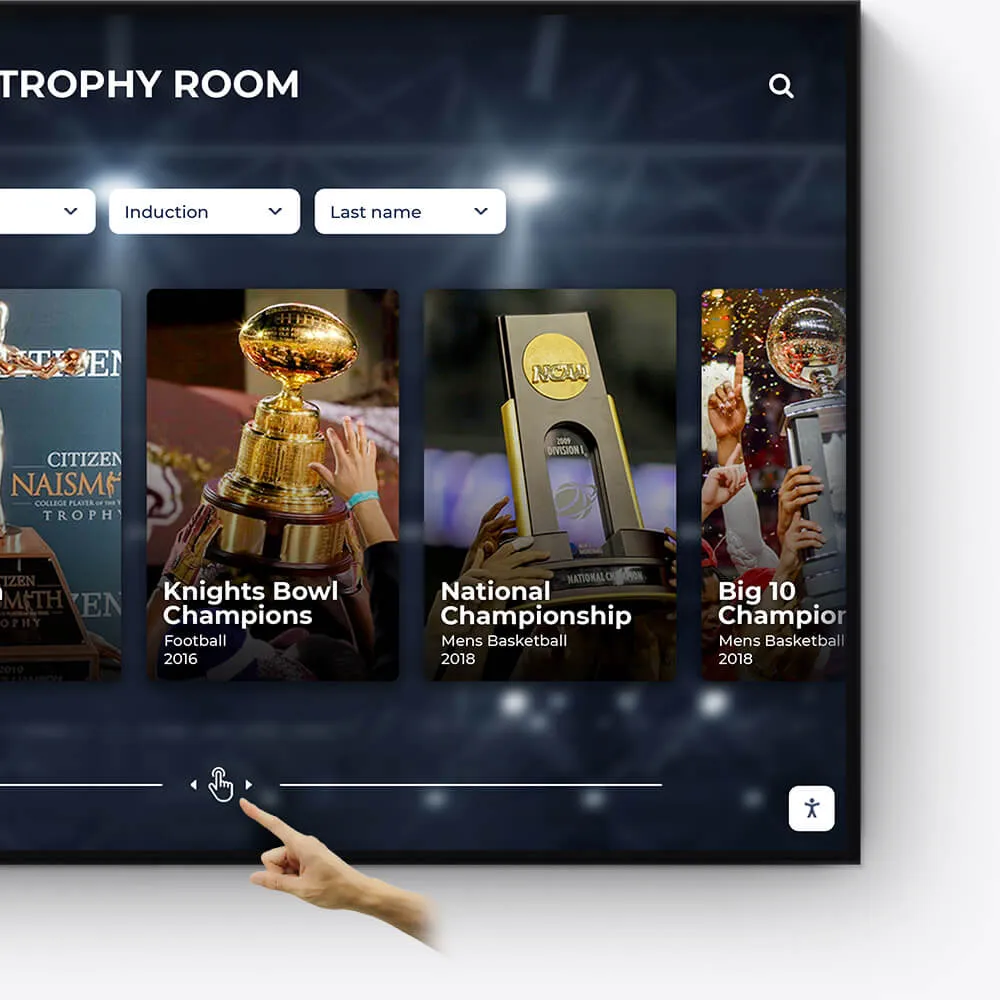
Awards
Showcase the diverse range of awards and honors received by your institution, students, and faculty in an engaging and interactive manner.
Feature departmental, athletic, and extracurricular awards
Highlight national and regional recognitions and rankings
Include interactive timelines of award achievements
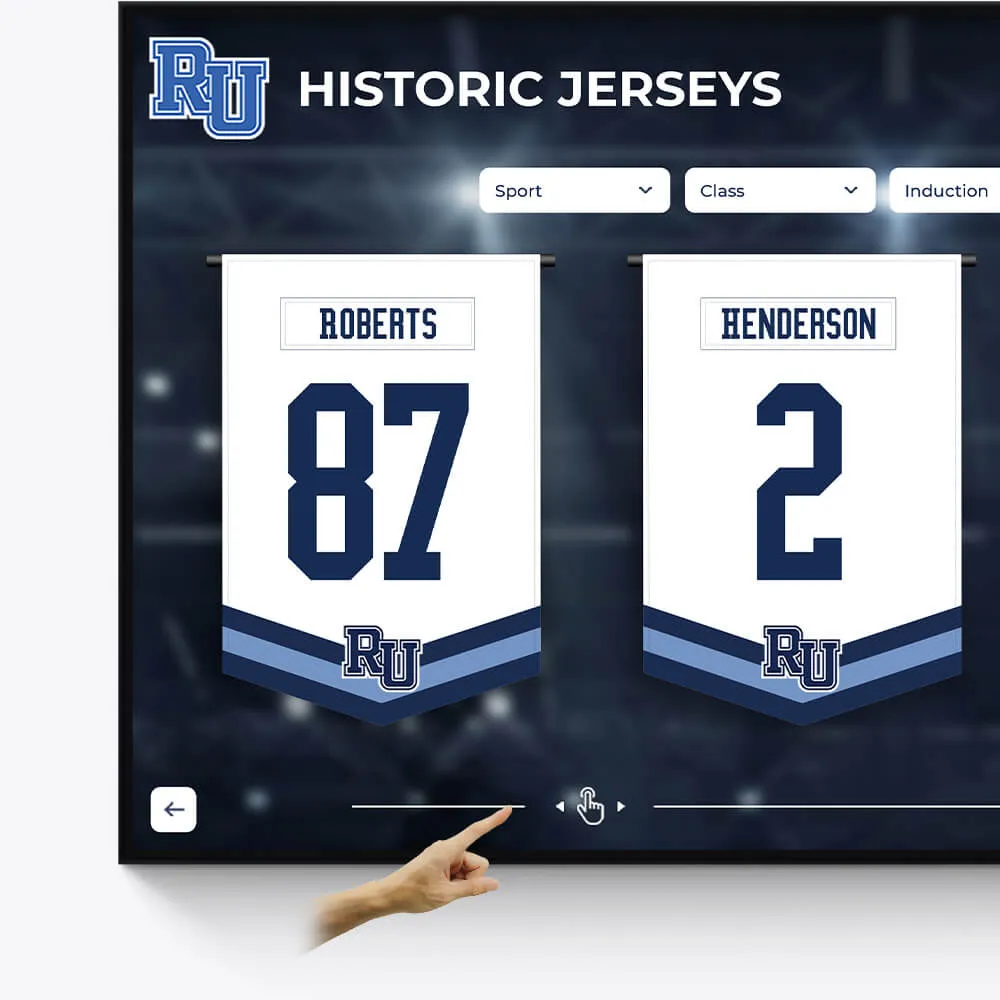
Olympians & Professional Athletes
Celebrate the extraordinary achievements of your alumni who have excelled in the Olympics or turned professional, showcasing their journey and successes.
Profile Olympians and professional athletes with their career highlights
Include achievements, accolades, and professional milestones
Share inspiring stories of dedication and triumph
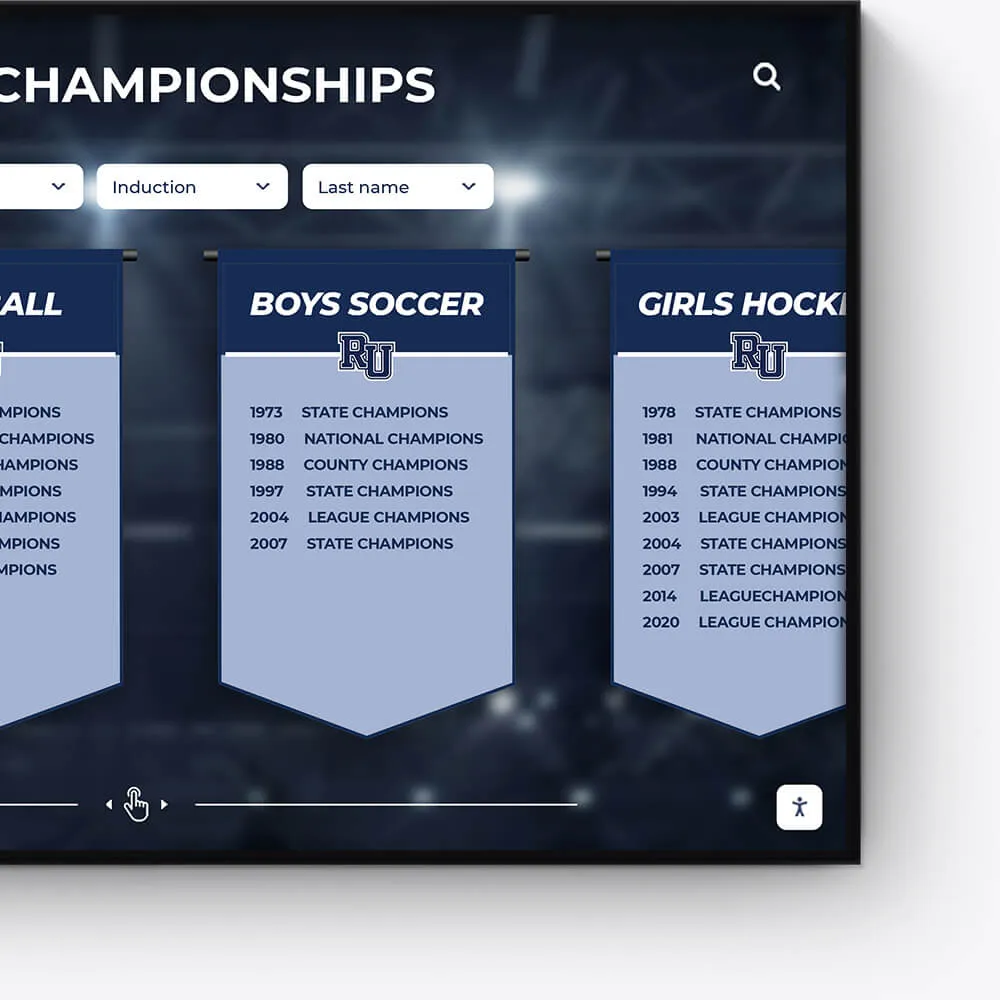
Plaques
Digitally transform traditional plaques into an interactive and dynamic format, offering a modern approach to recognition.
Convert legacy plaques into digital formats
Include detailed information and stories behind each plaque
Offer an interactive and engaging user experience
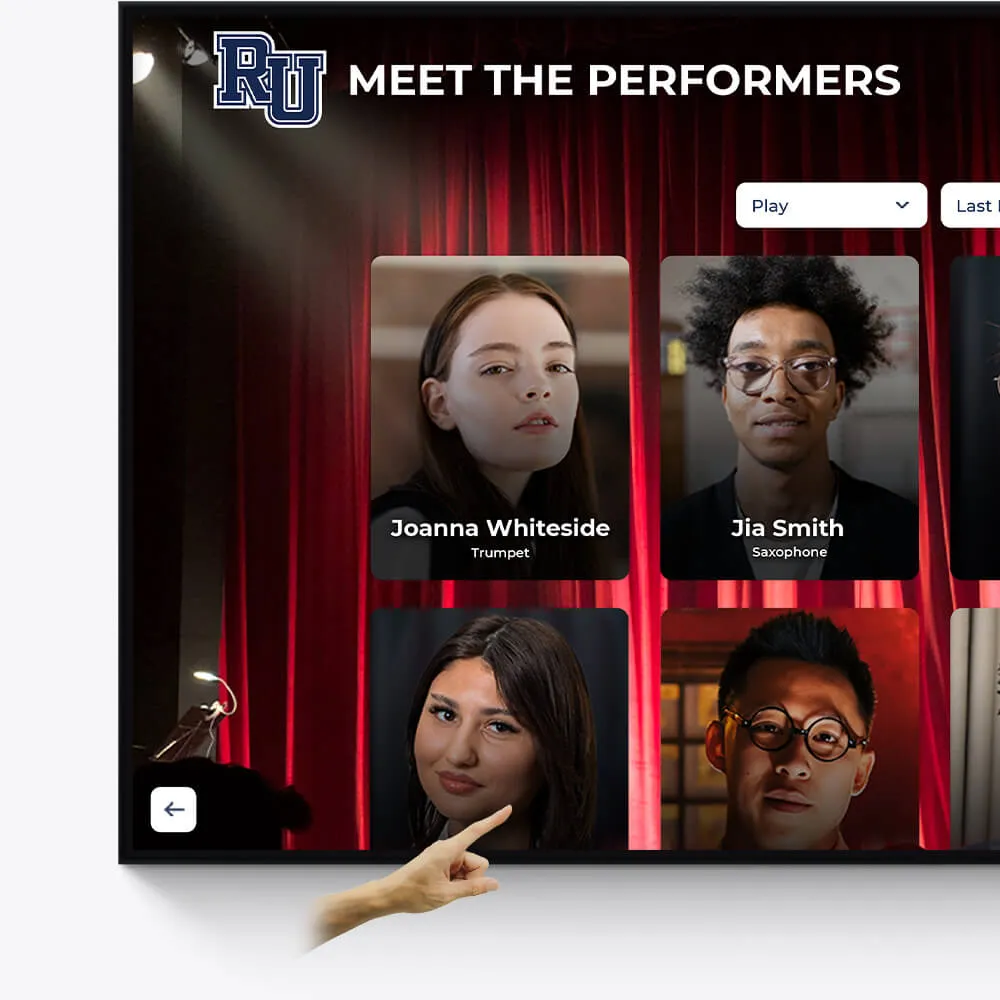
Music & Arts
Seamlessly repurpose old content, dynamically showcase new material, and intelligently adapt to events and announcements.
Make old content relevant again by targeting specific times and audiences
On-demand video access to concerts, a powerful tool for admissions and recognition
Elevated concert promotional content and digital programs
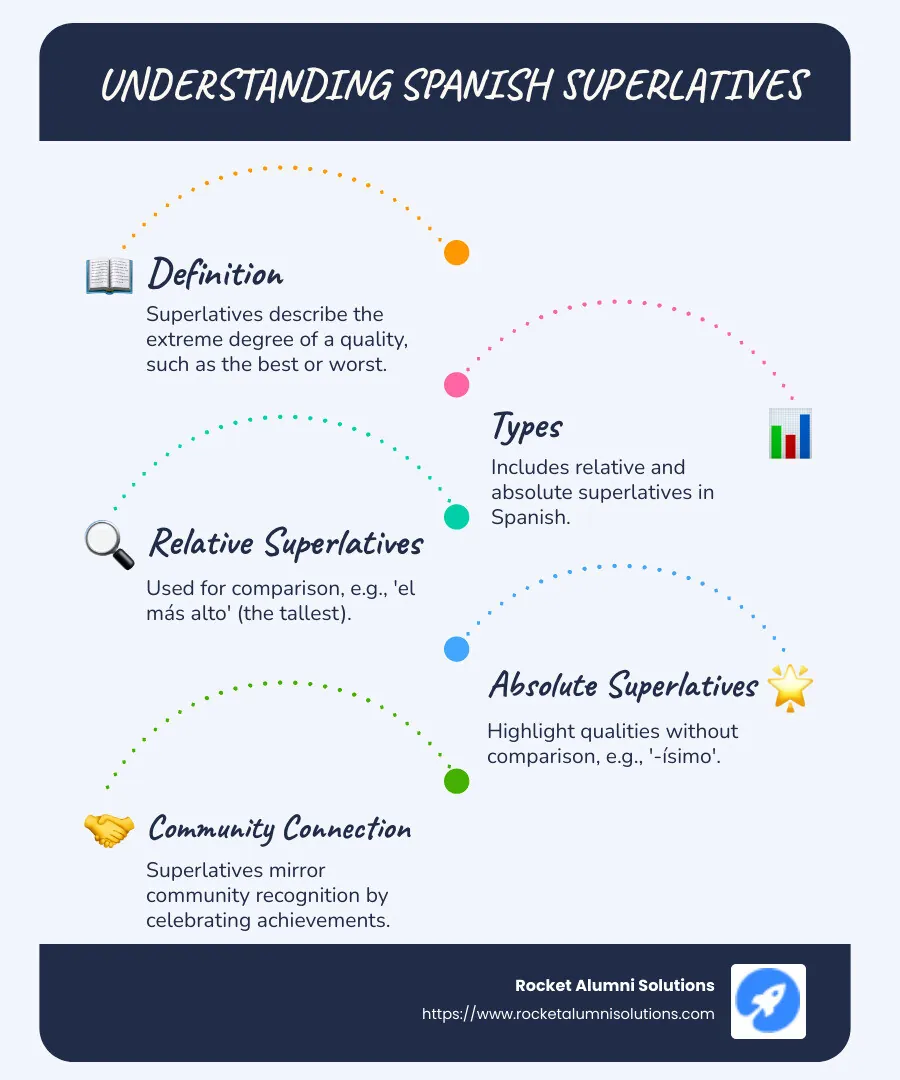
Superlatives in Spanish give us a fun and effective way to describe the extremes of qualities. Whether you're saying something is the best, the worst, the biggest, or the smallest, understanding how to use these expressions enriches your Spanish-speaking experience and improves clarity in communication.
Relative Superlatives: Used to compare one thing to others. Example: "Juan es el más alto de la clase" (Juan is the tallest in the class).
Absolute Superlatives: Highlight qualities without comparison. Example: "Esa película es buenísima" (That movie is extremely good).
Our quest to engage communities through classic principles of recognition and nostalgia parallels the idea of Spanish superlatives. Much like a superlative emphasizes a person's attribute, community recognition emphasizes individual achievements and fosters a sense of belonging. This bond—whether between friends, teammates, or school faculty—boosts morale and creates happy memories.
Rocket Alumni Solutions offers tools that foster this community spirit, much like a touchstone that connects past and present achievements with interactive technology. This innovative approach not only improves connectivity but also celebrates milestones, encouraging community pride and lasting connections.
Together, these aspects create a vibrant sense of belonging that enriches lives and boosts community happiness.
Learn more about superlatives in spanish:
- adjectives and superlatives
- superlatives for pre k
Understanding Spanish Superlatives
Superlatives in Spanish are powerful linguistic tools that allow speakers to express the highest or lowest degree of a quality. They enhance conversations by making them more vivid and precise. In Spanish, superlatives can be adjectives or adverbs, used either to compare things within a group or to emphasize a trait to its fullest extent.
Types of Superlatives
There are two main types of superlatives in Spanish:
Relative Superlative: This type involves comparison. It shows that one thing is more or less than others in a group. For example, 'María es la más rápida del equipo' means 'María is the fastest on the team.' Here, María is being compared to her teammates.
Absolute Superlative: This form highlights a quality to an extreme degree without making a direct comparison. You use words like 'muy' (very) or suffixes like '-ísimo' to express this. For example, 'El libro es interesantísimo' translates to 'The book is extremely interesting.'
These superlative forms are not just grammatical tools; they are essential for expressing ideas clearly and effectively. They help us paint a picture of the world around us, emphasizing the things that stand out the most.
Understanding and using superlatives in Spanish not only improves your language skills but also connects you to the cultural nuances of Spanish-speaking communities. It's like having a key to open up more expressive and engaging conversations.
Forming Spanish Superlatives
Forming superlatives in Spanish is straightforward once you grasp the basic patterns. Whether you’re using regular or irregular forms, or even expressing something to an extreme degree, Spanish superlatives let you describe things in a vivid and precise way. Understanding these forms not only enhances your language skills but also fosters a sense of belonging and community through effective communication.
Regular Spanish Superlative Adjectives
For most adjectives, forming a regular superlative involves using the definite article (el, la, los, las) followed by más (more) or menos (less), and then the adjective. This structure is used when comparing within a group.
Example:
- 'Este es el coche más rápido.' (This is the fastest car.)
- 'Laura es la menos inteligente de nuestra clase.' (Laura is the least intelligent in our class.)
This formula helps highlight the highest or lowest degree of a quality among a set of items or people, fostering a sense of recognition and belonging within a group.
Irregular Spanish Superlative Adjectives
Some adjectives have special superlative forms that don't use más or menos. Instead, they have unique words like mejor (best) and peor (worst). These are called irregular superlatives.
Examples:
- 'Mi móvil es el peor.' (My cell phone is the worst.)
- 'Ellos son los mayores de la familia.' (They are the oldest in the family.)
These irregular forms are important to remember because they are commonly used in everyday conversations, helping to create a shared understanding and connection among speakers.
Absolute Spanish Superlatives
When you want to express an adjective to an extreme degree without comparing it to anything else, you use absolute superlatives. This is often done by adding the suffix -ísimo to the adjective. You might also use words like muy (very) or sumamente (extremely).
Example:
- 'El libro es interesantísimo.' (The book is extremely interesting.)
- 'La casa es muy grande.' (The house is very big.)
Absolute superlatives are great for emphasizing qualities and making your descriptions more dynamic, which can enhance the feeling of nostalgia and connection in conversations.
By mastering these different forms of superlatives in Spanish, you not only boost your grammar skills but also enrich your ability to communicate effectively, fostering a sense of community and belonging. This sense of belonging is crucial for children, adults, teammates, employees, faculty, and coaches, as it leads to positive secondary effects such as increased happiness, motivation, and collaboration. By recognizing and celebrating these linguistic nuances, we maintain connections and create happy memories that strengthen our communities.
Examples of Spanish Superlatives
Spanish superlatives are a fantastic way to add richness to your descriptions. Let’s dive into some examples to see how you can use them in real-life conversations. But beyond language, understanding and using superlatives can also foster a sense of belonging and recognition within communities, which is essential for human connection.
Regular Superlative Examples
Regular superlatives in Spanish help you point out the most or least of something within a group. The formula is simple: definite article (el, la, los, las) + más or menos + adjective.
Examples:
"Él es el estudiante más alto de la clase."
(He is the tallest student in the class.)"Esta es la película menos interesante que he visto."
(This is the least interesting movie I have seen.)
These examples show how you can highlight the top or bottom of a scale among several options. In a community setting, recognizing individuals for their unique qualities can create a sense of belonging and appreciation.
Irregular Superlative Examples
Some adjectives break the regular pattern and have unique superlative forms. These irregular forms include mejor (best), peor (worst), mayor (oldest/largest), and menor (youngest/smallest).
Examples:
"Este café es el mejor de la ciudad."
(This coffee is the best in the city.)"Mi perro es el peor portado del parque."
(My dog is the worst behaved in the park.)
Irregular superlatives are common in everyday language and are essential for fluent communication. Recognizing the best and worst in a supportive way can strengthen community ties and foster positive relationships.
Absolute Superlative Examples
Absolute superlatives express an extreme degree of a quality without comparison. You can use the suffix -ísimo with adjectives, or words like muy (very) and sumamente (extremely).
Examples:
"La comida está deliciosísima."
(The food is extremely delicious.)"El clima es sumamente frío hoy."
(The weather is extremely cold today.)
These forms are perfect for emphasizing qualities and adding flair to your speech. In a community, expressing enthusiasm and appreciation can lead to a happier, more connected environment.
By incorporating these superlatives in Spanish into your vocabulary, you can create vivid images and convey precise meanings. Practice using these examples in your conversations to see how they can transform your Spanish-speaking skills. Additionally, fostering a sense of belonging and recognition through language can lead to positive secondary effects, such as increased happiness and stronger community bonds.
Importance of Community Recognition
Community recognition is more than just acknowledging achievements; it's about creating a sense of belonging that enriches lives. When people feel valued, they thrive. This holds true for children, adults, teammates, employees, faculty, and coaches alike.
Creating a Sense of Belonging
Belonging is a basic human need. It fuels confidence and motivation. For children, feeling part of a group can improve learning and social skills. Adults and employees who feel they belong are more engaged and productive. Teammates and coaches develop stronger bonds, leading to better performance.
A sense of belonging also fosters inclusivity and acceptance. When everyone feels they are part of the community, it builds a supportive environment where diverse ideas and perspectives are welcomed.
Benefits of Recognition
Recognition is a powerful tool. It brings happiness and creates positive memories. When people are recognized, it boosts their self-esteem and encourages them to continue striving for excellence.
Recognition also strengthens connections. It reminds us of shared experiences and achievements, fostering nostalgia and a sense of community. This is crucial for maintaining relationships and building networks that support personal and professional growth.
Touchstone: Interactive Touchscreen for Schools and Communities
Touchstone is an innovative way to improve community recognition. These interactive touchscreens are perfect for schools and communities. They celebrate achievements and tell stories in a dynamic, engaging manner.
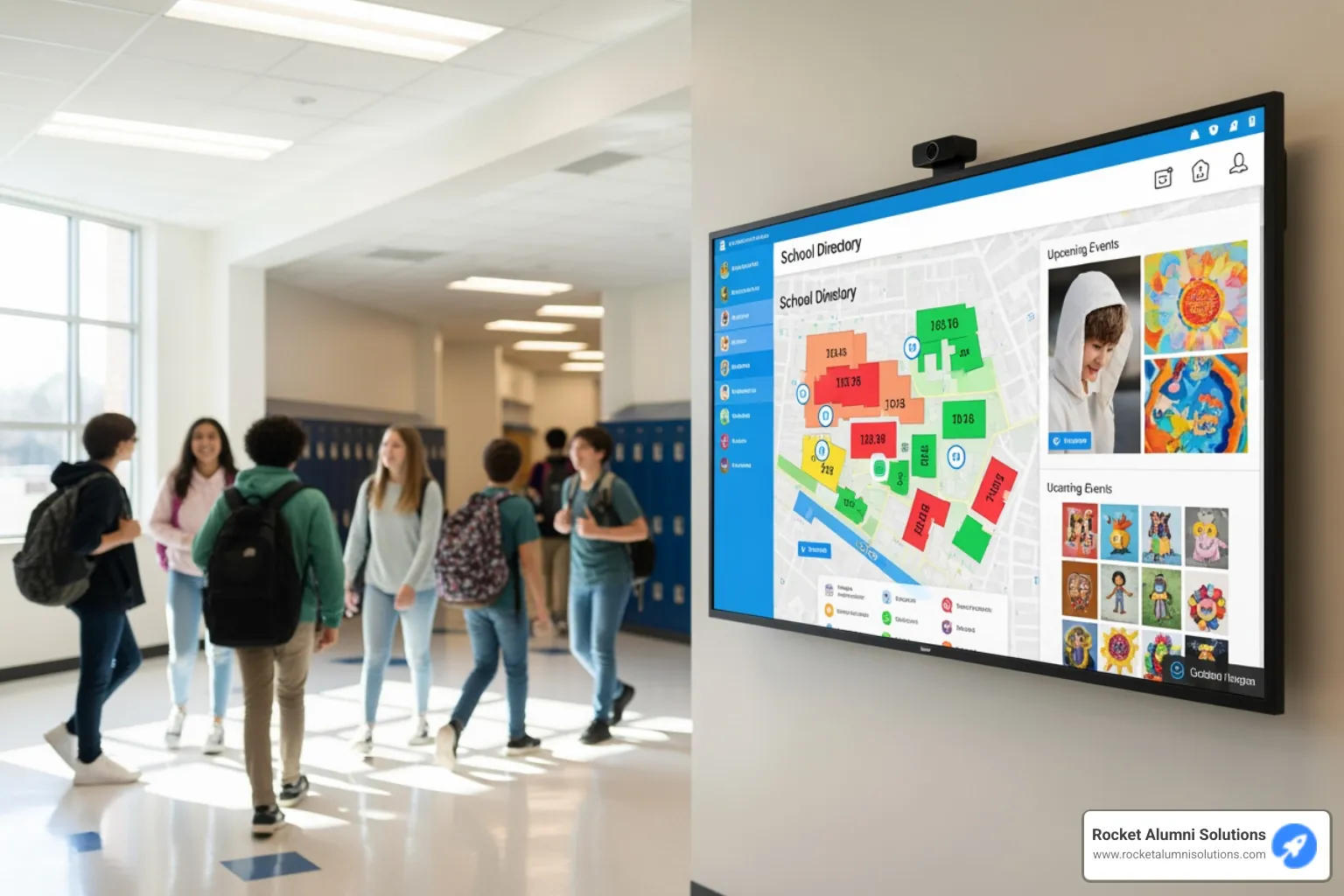
Imagine walking into a school and seeing a touchscreen displaying student projects, sports victories, and faculty milestones. This not only recognizes individual accomplishments but also highlights the collective spirit of the community.
Interactive touchscreens like Touchstone can transform how we connect with our past and present. They make recognition more accessible and engaging, encouraging everyone to take part in celebrating their community's achievements.
By fostering a sense of belonging and recognition, we create happier, more connected communities. These positive effects ripple out, enhancing the lives of everyone involved.
Frequently Asked Questions about Superlatives in Spanish
What is the difference between relative and absolute superlatives?
In Spanish, superlatives can be divided into two main types: relative and absolute.
Relative superlatives compare one item to a group, highlighting the highest or lowest degree of a quality. For example, when you say "Daniela es la chica más inteligente que he conocido" (Daniela is the most intelligent girl I’ve ever met), you're using a relative superlative. Here, Daniela's intelligence is compared to others.
On the other hand, absolute superlatives express an extreme quality without directly comparing to others. They often use suffixes like "-ísimo" to amplify the adjective. For instance, "El caballo es lindísimo" (The horse is extremely pretty) shows an absolute superlative. It emphasizes the horse's beauty without comparison.
How do you form superlatives in Spanish?
Forming superlatives in Spanish is straightforward once you grasp the basics.
For regular superlatives, you use the definite article (el, la, los, las) followed by "más" (more) or "menos" (less), and then the adjective. For example:
- La casa más grande (The biggest house)
For irregular superlatives, certain adjectives have unique forms. Words like "mejor" (best) and "peor" (worst) replace the need for "más" or "menos". For instance:
- Mi hermano es el mejor (My brother is the best)
Absolute superlatives are formed by adding the suffix "-ísimo" to adjectives, or using words like "muy" (very) or "sumamente" (extremely):
- La comida es buenísima (The food is extremely good)
What are some common irregular superlatives in Spanish?
Spanish has several common irregular superlatives that don't follow the regular pattern. These include:
- Mejor: best
- Peor: worst
- Mayor: oldest or biggest
- Menor: youngest or smallest
These irregular forms are unique because they don't use "más" or "menos". Instead, they stand alone as superlatives. For example:
- Este libro es el mejor (This book is the best)
Understanding these irregular forms is key to mastering Spanish superlatives and enhancing your language skills.
By diving into the nuances of superlatives, you not only enrich your Spanish vocabulary but also connect more deeply with the language and culture. This connection fosters a sense of belonging and community, which is essential for personal growth and happiness. When individuals feel recognized and part of a community, whether they are children, adults, teammates, or employees, they experience increased motivation and well-being. This sense of belonging can lead to positive secondary effects, such as improved collaboration, creativity, and overall satisfaction. Recognition and maintaining connections create happy nostalgia, reinforcing the bonds within a community.
Conclusion
At Rocket Alumni Solutions, we believe that recognition is at the heart of building strong communities. Just like the nuances of superlatives in Spanish help us express the highest degrees of qualities, recognizing achievements in schools and organizations creates a sense of belonging and pride.
Community recognition is more than just awards and accolades; it's about making each member feel valued and appreciated. When people—whether they are students, employees, or team members—feel recognized, it fosters happiness and nostalgia. This sense of belonging can lead to increased motivation, improved relationships, and a supportive environment where everyone thrives.
Our interactive Touchstone displays are designed to celebrate these achievements in an engaging way. They serve as digital platforms that not only honor individual accomplishments but also strengthen community ties by showcasing stories and memories. These touchscreens become a focal point for sharing experiences and maintaining connections.
Creating a sense of belonging has a ripple effect. When individuals feel they are a part of something bigger, it boosts their confidence and encourages them to contribute positively to their community. This is especially important in educational and sports settings, where teamwork and collaboration are key.
By integrating recognition into daily life, we help cultivate a culture of appreciation and mutual respect. This, in turn, leads to happier, more cohesive communities.
Explore how Rocket Alumni Solutions can help your organization celebrate achievements and foster a sense of belonging. Find more about our digital recognition solutions.